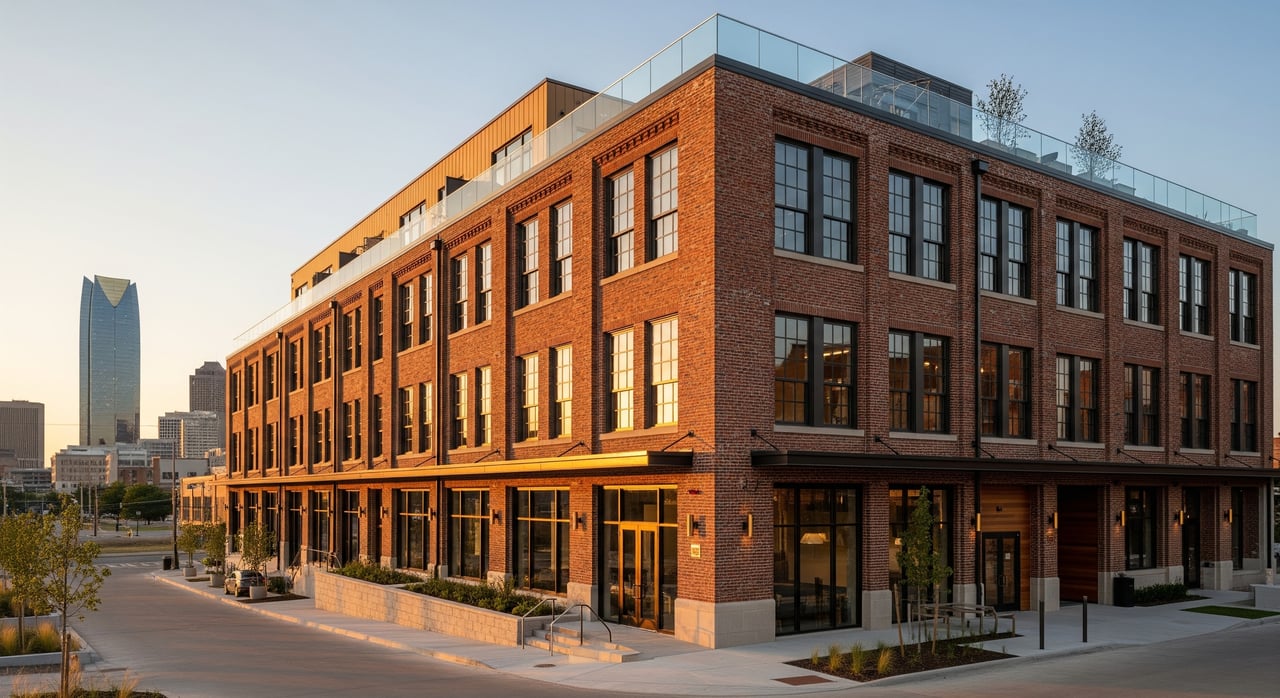
Are you watching older towers and storefronts in Downtown OKC transform into apartments and wondering what that means for your next deal? You are not alone. Investors across the metro are tracking adaptive reuse because it can shift supply, comps, and rent expectations faster than a traditional cycle. In this guide, you will learn the local signals to watch, how conversions change the rent story, and a practical underwriting checklist to help you price risk with confidence. Let’s dive in.
Why Downtown OKC is primed for reuse
Downtown Oklahoma City has benefited from years of public investment and placemaking. City programs like MAPS, street improvements, and the streetcar have strengthened walkability and everyday amenities that renters value. That activity helps support higher achievable rents for centrally located housing and makes residential conversions more feasible.
At the same time, a growing resident base downtown provides a real demand foundation. New construction and rehabs have added units over the past decade, and those households support ground-floor retail and services that new renters want. When you pair that with underused office and historic stock, you get a market where adaptive reuse can pencil with the right building and incentive stack.
Market signals to watch
Office vacancy and economics
Shifts in office demand are a key early signal. If central business district vacancy rises, more buildings become candidates for office-to-residential conversion. You should monitor downtown vacancy, sublease activity, and renewal terms, then compare the value of holding office against the value of converting. The relative economics help you screen properties before you dig into building-level due diligence.
Active conversions and permits
Visible projects and filings are the clearest sign that momentum is real. Track change-of-use requests, building permits, and certificate-of-appropriateness applications for historic properties. Watching the docket can also reveal clustering by block, which may affect lease-up pace and near-term concessions in that micro area.
Practical ways to stay current:
- Review the city’s planning and permitting agendas on a recurring schedule.
- Drive targeted blocks to note scaffolding, dumpsters, and exterior work that often precede interior conversions.
- Keep a running list of addresses with basic notes on floor plate, windows, and parking.
Incentives and the funding stack
The federal Historic Tax Credit can change a project’s math. The program offers a 20 percent credit on qualified rehabilitation expenses for certified historic structures, with rules set by the National Park Service. If your building is listed or eligible and you can meet the Secretary of the Interior’s Standards, the federal Historic Tax Credit program is worth a serious look.
If you plan any affordable component, the Low-Income Housing Tax Credit may be an option. Structures differ for 4 percent and 9 percent deals, and timelines and competitiveness vary by market. Start with HUD’s background materials to understand eligibility basics and documentation using LIHTC resources from HUDUSER.
Local tools can also matter. Case-by-case gap funding, tax abatements, or utility credits may be available. Align your application calendar with your construction and financing timeline, since incentive timing can affect your interest carry and closing sequence.
Supply, rents, and comps: what to expect
Conversions often deliver smaller, efficient units with a higher share of studios and one-bedrooms. That product mix targets renters who value location and convenience over size, including young professionals, some empty nesters, and short corporate stays. Expect more amenity-forward interiors, upgraded finishes, and creative use of common spaces.
Rents can follow a split pattern. Newly converted buildings may achieve premium asking rents if finishes, layouts, and amenities outpace older non-renovated stock. At the same time, the total number of doors in the core increases, which can create near-term pressure on older downtown assets that have not seen recent capital investment. In blocks with multiple simultaneous deliveries, watch for localized rent compression and temporary concessions.
Comps will reset quickly after a few conversions stabilize. Appraisers and brokers look closely at the most relevant product when setting value. Separate your comp set into newly converted versus legacy product so you do not overstate achievable rents for older assets. Record not just asking rents but also effective rents, concessions, and lease-up velocity for a fair read on performance.
Lease-up may take longer than a ground-up class A project. Smaller units, historic layouts, and parking constraints can stretch absorption. Model a longer lease-up curve and assume a concession period during stabilization. Conservative pacing can keep your debt coverage ratios realistic.
Underwriting checklist for conversions
Use this short-list to frame your diligence and model risk upfront.
Preliminary market and financials
- Define your target renter and right-size the unit mix after a demand review.
- Separate achievable versus stabilized rent. Include vacancy, management fees, and expected concessions.
- Run sensitivities for rent compression, a 25 percent capex overrun, and a 6 to 12 month lease-up extension.
Building and site physicals
- Verify title, easements, and any covenants early.
- Map structure and systems: floor-to-floor heights, floor plate depth, core locations, and column spacing.
- Assess envelope and fenestration for natural light and replacement needs.
- Test structural capacity for new penetrations or floor changes. Confirm slab depths and live loads.
- Evaluate MEP condition and capacity. Note electrical service size, HVAC plant, and water and sewer constraints.
- Review elevators and stairs for residential code and accessibility.
- Budget for hazardous materials testing and remediation.
- Confirm egress, sprinklers, and fire ratings with a code consultant.
- Study parking supply and options for shared or offsite agreements near the streetcar and transit.
Entitlements, historic factors, and incentives
- Confirm historic status and feasibility of HTC. Align your scope with the Standards.
- Check zoning, change-of-use needs, and any variances.
- Screen federal and local incentives for eligibility and timeline. Build the calendar into your pro forma.
Cost and schedule budgeting
- Hard costs: selective demo, shell repair, new MEP, elevators, windows, partitions, kitchens, and baths.
- Soft costs: architecture, structural and MEP engineering, historic and code consultants, legal, and permits.
- Carry a 10 to 20 percent contingency on hard costs and higher if unknowns exist.
- Model interest carry, draw schedule, and refinance covenants.
- Track capex per unit and implied stabilized cap rate. Back-test your pro forma with a physical takeoff.
Operating and leasing assumptions
- Underwrite tax reassessment risk after conversion and insurance changes.
- Plan for pre-leasing, marketing, concessions, and turnover.
- Benchmark effective rents and concessions against both converted and purpose-built downtown comps.
Exit and valuation
- Build a sale comp set for downtown conversions and stabilized multifamily.
- Stress-test interest rates and cap rate expansion at exit. Assess refinance risk if stabilization slips.
Risks and mitigants to plan for
Unknown conditions
- Risk: hidden asbestos, masonry issues, or underground obstacles.
- Mitigant: thorough condition surveys and a bigger contingency.
Historic compliance delays
- Risk: extra reviews add time and cost.
- Mitigant: engage SHPO and HTC advisors early and align timelines with lenders.
Parking shortfalls
- Risk: limited on-site parking slows lease-up.
- Mitigant: shared parking, valet, offsite leases, or renter transit incentives.
Leasing velocity misses
- Risk: slower-than-expected absorption stresses DSCR.
- Mitigant: pre-leasing, staged deliveries, and conservative financial covenants.
Rezoning or tax volatility
- Risk: higher post-conversion taxes or delays in approvals.
- Mitigant: model higher taxes and discuss abatements with economic development early.
Next steps for Downtown OKC investors
- Map your target buildings and score each on floor plate depth, window exposure, and parking.
- Build a rolling tracker of downtown permits and historic filings to spot clusters and timing.
- Conduct a quick incentive screen and calendar the HTC and LIHTC dates next to your financing schedule.
- Develop a comps file that separates new conversions from legacy stock. Capture asking and effective rents.
- Run three sensitivity cases on every deal: rent compression, capex overrun, and lease-up delay.
- Identify two parking solutions before closing. Price the cost or revenue impact of each.
Connect with local expertise
If you want a grounded, relationship-first advisor to pressure-test a Downtown OKC conversion, walk comps, and help you plan a leasing strategy, let’s talk. Schedule a personalized consultation with Unknown Company.
FAQs
What is adaptive reuse in Downtown OKC?
- It is the conversion of underused buildings, often historic office or retail, into apartments that fit today’s renter preferences for walkable, amenity-rich living.
How do federal Historic Tax Credits work for conversions?
- The program offers a 20 percent credit on qualified rehabilitation expenses for certified historic structures; see the Historic Tax Credit program overview for requirements and process.
How might conversions change rents for older downtown assets?
- New conversions can set premium rents, while the added supply may create near-term pressure and concessions for older, non-renovated buildings that compete on price and location.
What data should I track before making an offer?
- Track office vacancy, active permits, comp rents and concessions, unit mix trends, parking ratios, incentive timelines, and a building’s floor plate, fenestration, and MEP capacity.
How does parking affect underwriting in Downtown OKC?
- Limited on-site parking can slow lease-up and reduce achievable rent; underwrite shared or offsite solutions and consider renter transit options near the streetcar.
Where can I learn about LIHTC for mixed-income conversions?
- Start with HUDUSER’s LIHTC resources for eligibility, allocation structures, and research to see if the credit fits your business plan.